
That equation has flipped. The three-wheel platform is now being used for something more interesting than fall prevention. It is being used for capacity. The same geometry that keeps a rider upright at a stoplight also keeps a loaded basket upright. The same wide rear track that compensates for a hesitant rider also compensates for 50 pounds of groceries, a bag of camping gear, or a week of errands. The adult tricycle is no longer a compromise vehicle. It is a different category of vehicle altogether, one built around the idea that a bike can be a practical tool without being a cargo bike in the industrial sense.
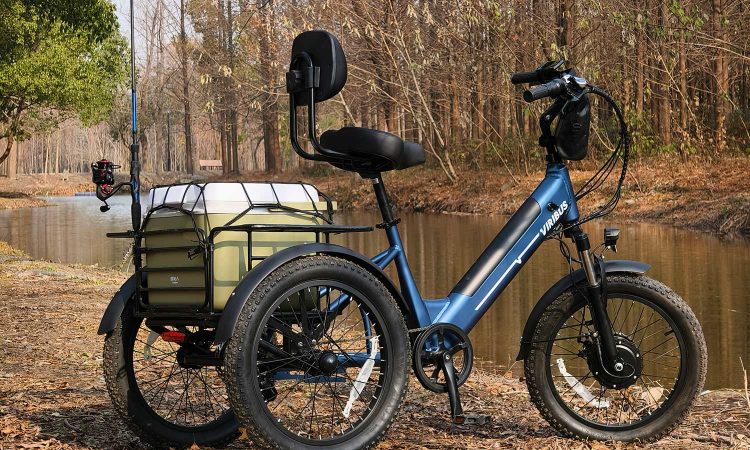
The clearest evidence of this shift is in how the best current trikes are designed. The low step-through frame is still there, because it solves a real problem for a wide range of riders. But the frame material has moved toward heat-treated carbon steel and aluminum, with load ratings that reach 205 kg on some models. The rear basket is no longer an afterthought bolted onto a cruiser; it is a structural part of the vehicle, sized for actual errands rather than a single bag of apples. A three wheel bike in this mold does not ask the rider to choose between “stable” and “useful.” It assumes both.
The second shift is electric assistance. This is where the category stops being a revised version of an old product and starts being a genuinely new one. A 250W or 350W motor does not turn a trike into a motorcycle. It does something more specific: it removes the two situations where trikes have always felt like work—starting from a stop and climbing even a mild incline. Those are the moments when the extra weight and the third wheel become a liability. Assistance eliminates them without removing the stability that made the third wheel worth having. The Viribus electric tricycle lineup illustrates this well, because the range now spans from simple commuting trikes to folding models with 750W motors and rear differentials. The platform is the same; the capability is not.

What has not changed is the reason most people start looking. They want to ride without worrying about balance, and they want to carry things without wearing a backpack. That combination is not a niche need. It describes a parent with two kids and a bag of sports equipment, a commuter who does not want to arrive sweaty, a shopper who is tired of loading the car for a ten-minute trip, and yes, an older rider who wants to keep moving on their own terms. The adult tricycle has always served the last group well. It is now starting to serve the first three just as well, and that is a more meaningful evolution than any spec-sheet number.
The trike still has a learning curve. Steering is different. Turns require a little more planning. The first ride will not feel like a bicycle, because it is not one. But the category has moved past the point where “stable” is the only thing it has to offer. Stability is the floor now, not the ceiling.