You already know dirty injectors waste fuel, cause rough starts, and pull power out of your day. I want to help you pick a cleaning approach that actually solves the problem and fits your budget and timeline.
I choose methods that balance cost, downtime, and measurable results. I look for strong detergents, proven water control, and added lubricity, because those are the levers that restore a clean spray pattern and smooth combustion. For routine care, a quality diesel injector cleaner belongs in your plan. I also consider how easy the process is to repeat across seasons and vehicles.
In this guide, I will cover your main options, how to use them the right way, when to move beyond a bottle, and what habits keep injectors clean long term. You will leave with a clear step-by-step plan and brand guidance you can trust.
Why Clean Injectors Deserve Your Attention
Clean injectors deliver a fine, even mist.
That mist burns more completely.
You get smoother idle, faster throttle response, less smoke, and better fuel economy.
If you ignore deposits, the spray pattern breaks up, cylinders fall out of balance, and EGTs creep up. Over time, that can hurt valves, turbos, and DPF systems. Cleaning is cheaper than parts.
The Main Ways To Clean Injectors
You have three solid paths. Pick based on the level of buildup and the time you can spare.
1. In-tank detergent cleaning
- Add a cleaner to the fuel.
- Best for routine maintenance and mild to moderate deposits.
- Low cost and easy to repeat.
2. Pressurized on-vehicle cleaning
- Connect a canister to the rail and run the engine on a concentrated cleaner.
- Stronger hit for tough deposits.
- Needs the right tools and procedure.
3. Bench ultrasonic cleaning and flow testing
- Remove injectors and clean them in an ultrasonic bath.
- Flow test and pattern check.
- Best for severe buildup or suspect nozzles.
- More downtime and cost.
Start with in-tank. Escalate only if symptoms do not improve.
How to Use an In-Tank Cleaner the Right Way
Follow this simple process.
1. Check symptoms
- Hard starts, rough idle, light haze, lower mpg, or new ticking can point to dirty injectors.
- Rule out obvious air or fuel filter issues first.
2. Treat your next fill
- Dose a proven injector cleaner per the label.
- Mix before fueling to help blend it through the tank.
3. Run the tank to near empty
- Give the detergent time to work through all injectors.
- Keep notes on idle quality, throttle response, smoke, and mpg.
4. Repeat for two or three tanks if needed
- Stubborn deposits can take a few cycles.
- After that, switch to a maintenance dose.
5. Replace the fuel filter if it has high hours
- Cleaning can loosen debris. A fresh filter protects the rail.
Why I Recommend Howes for Ongoing Care
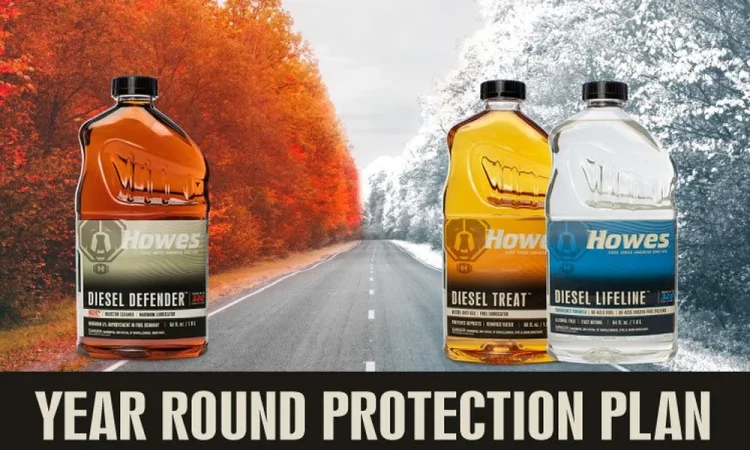
Howes has been building diesel additives for over a century. They focus on petroleum-based formulas and avoid harmful alcohol and harsh solvents. Their detergent technology targets internal injector deposits and carbon, while added lubricity helps protect pumps and injectors in today’s low-lubricity fuels.
Diesel Defender is their year-round injector cleaner and lubricator. It cleans, helps prevent new deposits, demulsifies water, and supports smoother starts and throttle response. They back their claims with a satisfaction guarantee, which tells me they stand behind the product.
If you face winter gel risk, their Diesel Treat protects against gelling and adds lubricity. If your fuel is already gelled, Diesel Lifeline is designed for emergency recovery. That full lineup covers routine care, cold-weather prevention, and rescue, which makes planning easy.
When to Escalate Beyond Additives
Move to a stronger method if:
- You still have misfire, heavy smoke, or loud injector knock after two or three treated tanks.
- Balance rates or return flow numbers stay out of spec.
- A scan shows a persistent contribution fault for one cylinder.
Next steps:
- Schedule a pressurized on-vehicle cleaning.
- If that fails, pull injectors for ultrasonic cleaning and flow testing.
- Replace any injector that fails pattern or flow checks.
Smart Maintenance Habits That Keep Injectors Clean
- Use a year-round cleaner and lubricator at the maintenance dose.
- Change the fuel filter on time or a little early.
- Drain water separators often.
- Buy fuel from high-turnover stations.
- Keep tanks topped off before overnight temperature drops.
- Fix small air leaks in the fuel system right away.
Common Mistakes to Avoid
- Overdosing cleaners beyond the label. More is not better.
- Mixing products that fight each other. Stick with one plan.
- Ignoring water. Water invites corrosion and injector wear.
- Treating symptoms only. Check filters, air intake, EGR, and boost leaks.
- Expecting one tank to erase years of deposits.
Quick Troubleshooting Guide: Signs of Dirty Injectors
If two or more show up together, start a cleaning plan.
Seasonal and Water Management Tips
Cold thickens fuel and slows spray. If you run in low temps, use a winter conditioner that also adds lubricity. Keep water out by using a treatment that demulsifies and by draining separators often. Clean fuel and dry fuel help detergents do their job.
A Practical Schedule You Can Follow
- At the next fill: Dose a full-tank injector cleaner.
- Tanks 2 and 3: Dose again if symptoms persist.
- After that: Switch to the maintenance dose each fill.
- Every service: Inspect filters, drain water, check for air leaks.
- Before winter: Add a cold-weather conditioner and verify separator function.
If you want a straightforward plan that fits real-world use, build your routine around a proven cleaner and water control. That keeps injectors clean, protects the pump, and helps you hold your mpg across seasons.