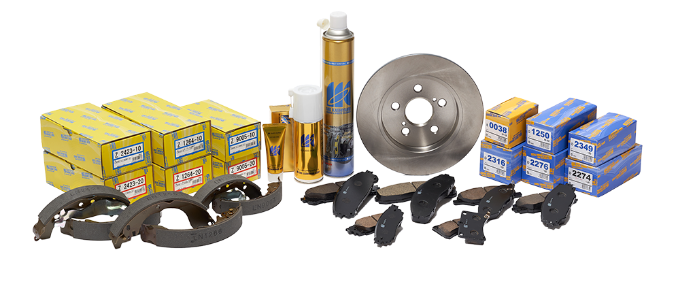
MK Kashiyama products have become a target for counterfeiters in the same way that any well-regarded brand eventually does: by building a reputation strong enough to make imitation commercially attractive. The logic of the counterfeit trade is grimly simple. Find a brand that buyers trust, reproduce its appearance at the lowest possible cost, and move the product through channels where scrutiny is limited. In the automotive brake components market, where that deception carries direct safety consequences, the stakes of getting sourcing wrong are considerably higher than a wasted purchase.
Why Brake Component Counterfeiting Is a Serious Problem
The counterfeit parts trade in the automotive sector is not a minor inconvenience operating at the margins of the market. It is a substantial, organised activity that costs the industry billions annually and places drivers at genuine risk. Brake components are among the most frequently counterfeited categories, for reasons that are not difficult to understand.
Brake pads and rotors are replaced on a regular cycle, creating consistent demand. They are relatively simple in appearance, making visual imitation achievable without sophisticated manufacturing capability. And the consequences of a counterfeit brake component failing in service are not limited to mechanical damage. They extend to the driver, passengers and everyone else sharing the road at the moment a vehicle’s stopping system proves unequal to the demand placed on it.
MK Kashiyama brake parts are produced to exacting standards that cannot be replicated at the cost margins that make counterfeiting profitable. The friction material formulations, dimensional tolerances and metallurgical specifications that define genuine MK Kashiyama components require the kind of engineering investment and quality infrastructure that counterfeit operations fundamentally cannot match. What they can match is the external appearance of the packaging and, in some cases, the physical profile of the component itself.
How Counterfeit Parts Enter the Supply Chain
Understanding where counterfeit components enter the distribution network is the first step in protecting against them. The pathways are varied and, in some cases, deliberately obscured to prevent detection.
Common entry points for counterfeit MK Kashiyama parts include:
Unverified online marketplaces
Platforms that permit third-party sellers to list automotive components without robust verification of product authenticity or supplier credentials
Informal trade channels
Grey market distributors who source components outside authorised networks and may not always distinguish between genuine and counterfeit stock themselves
Unusually low pricing
Counterfeit operations compete on price because they have no investment to recover in genuine engineering or quality control. Pricing that sits significantly below the established market rate for MK Kashiyama brake pads or rotors warrants immediate scrutiny
Packaging inconsistencies
Counterfeit packaging frequently carries errors in print quality, font consistency, part numbering or language that genuine products do not. These details are easy to overlook under casual inspection but reveal themselves under closer examination
Absent or incomplete documentation
Genuine mk kashiyama components are supplied through authorised channels with verifiable product documentation. Components that arrive without traceable paperwork should be treated with caution
Singapore’s Market and the Counterfeit Risk
Singapore’s automotive parts market operates within a well-regulated commercial environment, but that regulatory framework does not make it immune to the infiltration of counterfeit components. The city’s position as a regional trading hub means that goods from a wide range of origins flow through its distribution networks, and the volume and diversity of that trade creates opportunities for counterfeit products to enter alongside legitimate stock.
Workshops and individual buyers in Singapore who source MK Kashiyama parts through established, authorised distributors are well protected. The risk concentrates among those who seek out lower prices through less regulated channels, either online or through informal trade contacts.
As one parts procurement specialist based in a busy Ubi automotive hub observed: “We’ve seen fake brake parts come through before, not always easy to spot from the outside. The only real protection is knowing your supplier and sticking to authorised channels. With MK Kashiyama, the authorised network is clear enough that there’s no need to go elsewhere.”
How to Verify Genuine MK Kashiyama Components
Protecting against counterfeit MK Kashiyama brake parts involves a combination of supplier verification, physical inspection and awareness of the authentication features built into genuine products.
Supplier verification:
- Purchase exclusively through authorised distributors who can provide documentation of their supply chain relationship
- Verify distributor credentials directly if purchasing from an unfamiliar source
- Treat any seller unable or unwilling to provide product origin documentation as a potential risk
Physical and packaging inspection:
- Examine packaging carefully for print quality, font consistency and accurate part numbering
- Check that product labelling matches the established visual standards of genuine MK Kashiyama packaging
- Inspect the component itself for dimensional regularity, surface finish quality and the weight consistency that correctly formulated friction materials and rotor castings produce
Performance indicators post-fitment:
- Counterfeit brake pads frequently produce abnormal noise levels, uneven wear patterns or accelerated fade that genuine mk kashiyama compounds do not
- Premature rotor scoring or pad delamination within the early service period is a strong indicator of substandard friction material
- Inconsistent pedal feel or stopping distance variation after fitment warrants immediate investigation of component authenticity
The Cost of Getting It Wrong
The price differential between a genuine MK Kashiyama brake pad and a convincing counterfeit might appear modest at the point of purchase. The cost of getting that decision wrong is not modest at all. Beyond the financial loss of replacing a failed component, the safety implications of a brake system built around counterfeit parts are serious and, in a worst-case scenario, irreversible.
The automotive parts market rewards vigilance. Buyers who understand the sourcing landscape, who know where genuine components come from and who treat anomalies in pricing or packaging as warning signs rather than bargains are the ones who consistently avoid the risks that counterfeit products represent. Sourcing through authorised channels and applying the verification steps outlined above is the most reliable protection available, and it is the approach that the performance record of genuine MK Kashiyama products fully justifies.